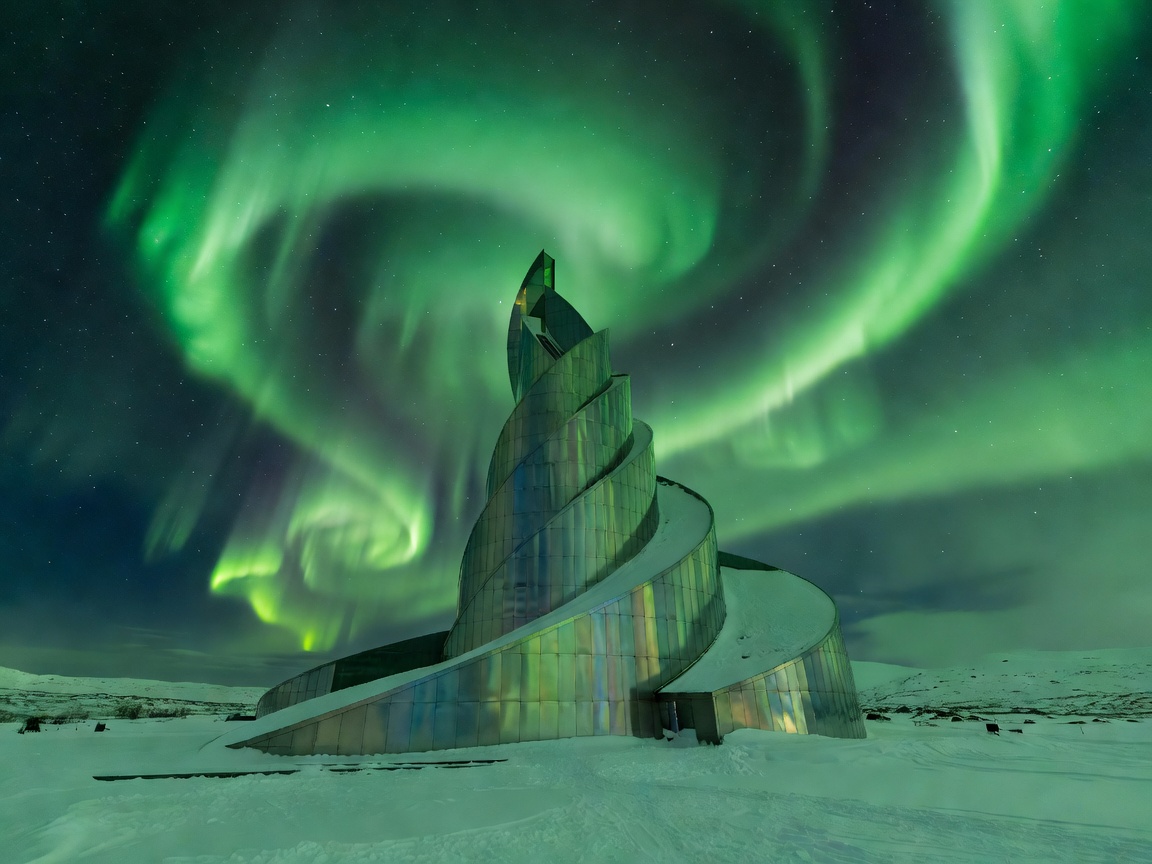
The Cradle of Auroral Science: Mount Haldde
Long before tourist chases and digital sensors existed, Norwegian physicist Kristian Birkeland recognized Alta’s exceptional meteorological stability. In 1899, Birkeland established the world’s first permanent auroral observatory atop Mount Haldde (907 metres above sea level), located just outside Alta. It was here that Birkeland demonstrated how streams of electrons emitted by the sun interact with Earth’s magnetic field lines—forming the foundation of space weather science.
Today, the historic stone structures on Haldde remain an iconic hiking destination for resilient winter mountaineers, while the town honourably bears the title 'City of the Northern Lights', celebrated by its striking modern Northern Lights Cathedral (Nordlyskatedralen) constructed from titanium panels that mimic shimmering auroral waves.
The Meteorological Advantage: Finnmark Inland Climate
The primary advantage Alta holds over Tromsø, Bodø, or the Lofoten chain is its weather stability. Situated at the end of the sheltered Altafjord and guarded by mountain ridges, Alta escapes the persistent low-pressure Atlantic frontal systems that bring frequent coastal precipitation.
While temperatures in Alta during January and February routinely drop between -15°C and -28°C, this extreme cold is characterized by dry, crisp, continental air masses with minimal humidity. Lower atmospheric moisture means fewer low cloud layers, negligible lens condensation, and dramatically higher odds of uninterrupted multi-hour aurora viewings.
Geomagnetic Coordinates
Alta rests at 69°58′N and 23°17′E, placing it within the sweet spot where the northern oval achieves peak intensity during local magnetic midnight (typically between 22:30 and 01:30 local Norwegian time).
Winter Wilderness Adventures in Alta
Alta's expansive terrain provides ideal conditions for traditional polar field pursuits:
- Finnmarksvidda Plateau Expeditions: Alta serves as the northwestern gateway to the Finnmarksvidda, Scandinavia's largest high mountain plateau. Snowmobile treks and long-distance dogsledding excursions into the plateau introduce travellers to endless, open horizons where the aurora illuminates snowy expanses across hundreds of square kilometres.
- Igloo & Ice Accommodations: Located along the frozen banks of the Alta River, the seasonal Sorrisniva Igloo Hotel provides an artistic retreat sculpted entirely from local river ice and snow. Guests sleep under reindeer hides while aurora monitors track sky activity overhead.
- Alta River Valley Dark Sites: Following the Alta River canyon south leads away from the settlement into pitch-black pine valleys where light pollution drops to zero, yielding deep contrast for astro-photography.
Seasonal Field Planning
| Month | Average Sky Condition | Daylight Hours | Recommended Activity |
|---|---|---|---|
| October | Transitional, clear inland nights | 8.5 – 9.5 hours | Hiking Haldde trail, autumn reflections |
| December | Polar Night, high clear sky ratio | 0 hours (Polar twilight) | Deep dark sky chases, dog sledding |
| February | Crisp high pressure, deep freeze | 6.0 – 8.0 hours | Finnmarksvidda traverses, snowmobiling |
| March | Equinox geomagnetic spikes, mild days | 11.0 – 12.5 hours | Ski expeditions & night photography |
Navigating Extreme Continental Cold
Operating camera equipment in Alta's dry sub-zero cold requires strict moisture management. When bringing cold cameras and lenses indoors from -25°C temperatures, never expose them to humid interior air immediately. Condensation will flash-form across optical elements and internal circuit boards. Seal camera bodies and lenses inside airtight zip bags before stepping into heated lodges, allowing the equipment to acclimate gradually over several hours.
Conclusion
For visitors whose primary expedition metric is maximizing clear-night probabilities and discovering the foundational heritage of Arctic science, Alta stands as an unmatched destination within the polar crown.